
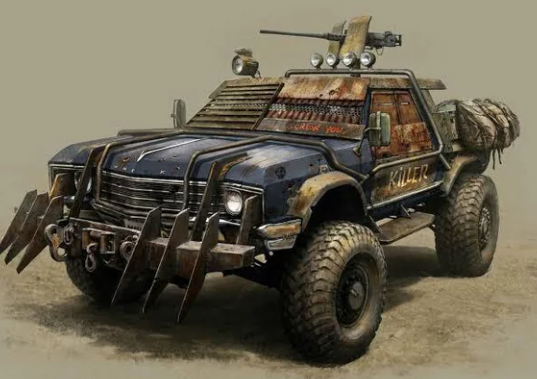
The thought of a post-apocalyptic world evokes images of desolation, survival, and adaptation. One crucial element that plays a significant role in this context is transportation. The right vehicle can mean the difference between survival and disaster in a world where resources are scarce, and dangers lurk around every corner.
1. The Utility of All-Terrain Vehicles
All-terrain vehicles (ATVs) are an essential choice in a post-apocalyptic scenario. Their capability to navigate diverse environments—be it muddy trails, rocky terrains, or open fields—makes them versatile. For instance, if you find yourself in a densely overgrown area, an ATV can maneuver through where larger vehicles might struggle, ensuring you can traverse the landscape efficiently.
Furthermore, ATVs can be modified for various survival needs. Adding storage compartments for gear, first-aid supplies, or non-perishable food means you’re not just getting from point A to point B, but you’re also prepping for the uncertainties ahead. In challenging weather conditions or when roads are blocked, having an all-terrain vehicle can be a lifesaver.
-
- Choose a reliable brand known for durability.
-
- Consider adding a winch for emergency recoveries.
-
- Equip your ATV with storage solutions for essential supplies.
-
- Regularly maintain your vehicle to prevent breakdowns.
2. The Importance of Fuel-Efficient Vehicles
In a post-apocalyptic setting, access to fuel will become increasingly challenging. This is where fuel-efficient vehicles can shine. Opting for a vehicle that can cover more distance on less fuel will allow you to maximize your resources and remain agile. For example, a small, hybrid vehicle can run on both gasoline and electricity, which could be beneficial if gas supplies dwindle.
Additionally, fuel-efficient vehicles tend to have simpler mechanics, making them easier to repair in makeshift conditions. A vehicle like a compact SUV can provide not just fuel efficiency, but also the capacity to carry supplies and passengers. Knowing how to maintain and troubleshoot these kinds of vehicles could reduce downtime during critical survival scenarios.
-
- Research and choose models known for fuel efficiency.
-
- Learn basic repair techniques to handle common issues.
-
- Keep essential repair tools in your vehicle at all times.
-
- Stockpile alternative fuel sources like biofuels.
3. Armored Vehicles for Safety and Security
As danger looms in a post-apocalyptic world, the need for safety becomes paramount. Armored vehicles provide a sense of security against potential threats. These vehicles can be modified by adding protective plates or using thick metals that can withstand impacts. They also allow for better visibility from vantage points, crucial for spotting hazards ahead.
Furthermore, armored vehicles can also serve as mobile safe havens. With added living space and the capability to carry additional supplies, you could use them not just for travel, but as a temporary shelter. Some prepared survivalists even choose to build or modify their own vehicles to ensure they meet their specific safety and security needs.
-
- Choose a base vehicle suitable for armor upgrades.
-
- Consider ballistic windows for enhanced protection.
-
- Install a secure storage area for equipment and supplies.
-
- Consult professionals for effective reinforcement methods.
4. Electric and Solar-Powered Vehicles
In times of limited resources, electric and solar-powered vehicles present a futuristic solution for transportation. As fossil fuels become harder to acquire, leveraging renewable energy sources can keep you on the move. An electric vehicle with solar panels on the roof can ensure you have a constant source of energy, allowing for greater independence and mobility.
Moreover, in densely populated urban areas that have become unsafe, these quiet vehicles can allow for stealthier movement. Combined with efficient planning for routes that maximize battery life, you can navigate from location to location while avoiding potential threats and conserving energy. Plotting your journey based on sunlight availability can further enhance your travel efficiency.
-
- Research effective solar panel kits for your vehicle.
-
- Understand battery management to make the most of your charge.
-
- Find maintenance tips specifically for electric vehicles.
-
- Scout for locations with sunlight for recharging options.
5. Custom-Built Survival Vehicles
Creating a custom-built survival vehicle could be the ultimate solution to your post-apocalyptic transportation needs. These vehicles can be uniquely tailored to fit your specific requirements, catering to the environment you are navigating, and your personal comfort and safety needs. For instance, building a truck with a reinforced cabin can provide safety while allowing you to transport more goods and equipment.
Custom vehicles also allow for efficiency in storage and mobility. You can integrate compartments for food, tools, and personal belongings while maintaining a flexible layout for sleeping or resting during long travels. However, it’s essential to consider weight distribution and balance to avoid compromising the vehicle’s handling capabilities.
-
- Plan out what features you need most for your survival.
-
- Consult with experts or enthusiasts on modifications.
-
- Start with a strong foundation, like a durable truck or van.
-
- Prioritize safety features in your design.
In conclusion, the right vehicle in a post-apocalyptic world could mean survival. Whether you choose all-terrain options, fuel-efficient models, armored cars, or even custom vehicles, being prepared for the future is crucial. Take time to gather information, plan accordingly, and invest in the right modifications for your adventure ahead.