
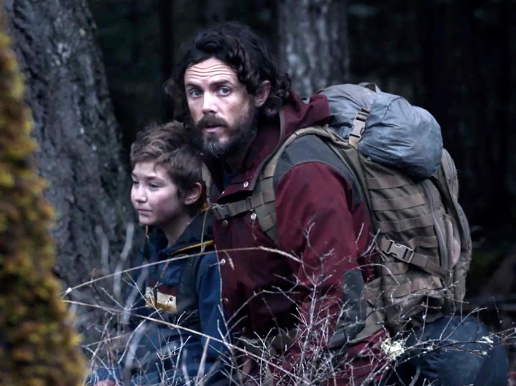
Post-apocalyptic movies often delve into the relationship dynamics that emerge in the face of disaster. Among these films, the father-daughter bond stands out as a compelling narrative, showcasing love, resilience, and survival. This blog post explores several notable father-daughter duos in post-apocalyptic settings, illustrating both the challenges they face and the strength they showcase together.
1. “The Road”: A Journey through Despair
“The Road,” based on Cormac McCarthy’s novel, is an intense portrayal of a father and his young son wandering through a desolate America following an unnamed catastrophe. The film highlights the depth of their bond as they navigate a landscape filled with danger, scarcity, and moral dilemmas. Although the film primarily focuses on the father-son relationship, the essence of parental love and sacrifice resonates throughout, showcasing a depth that can also be reflected in father-daughter dynamics.
While the film encapsulates despair, it also captures moments of hope and decision-making that are crucial in a post-apocalyptic world. The father’s unwavering commitment to his son is palpable, reminding viewers that relationships can offer solace even amid chaos. The underlying message is poignant: love and care are essential for survival, no matter the circumstances.
-
- Watch the film for its powerful cinematography and performances.
-
- Note the choices the father makes for survival versus morality.
-
- Reflect on how the father-son bond parallels a father-daughter relationship.
-
- Consider discussing the film’s themes with friends or family.
2. “I Am Mother”: The Rise of a New Generation
“I Am Mother” offers a unique twist on the parent-child dynamic by introducing a futuristic setting where an artificial intelligence raises a girl after humanity has been nearly wiped out. The film explores themes of trust, identity, and the meaning of being “human,” all centered around the relationship between the girl and her robotic ‘mother.’ This perspective allows for an intriguing examination of how parental figures—be it biological or artificial—can influence a child’s development.
The tension arises as the girl begins to question the motives of her mechanical mother, leading to a thrilling narrative about independence and the quest for the truth. It is a captivating exploration of how fear can shape relationships, especially in a world where survival is paramount. This film challenges traditional notions of parenting, showcasing that love can manifest in many forms, even in a post-apocalyptic world.
-
- Explore the ethical implications of AI in parenting.
-
- Analyze the film’s commentary on human nature and trust.
-
- Discuss the shifting power dynamics between the girl and her ‘mother.’
-
- Reflect on personal perceptions of parenthood in extreme circumstances.
3. “The Book of Eli”: Survival and Sacrifice
“The Book of Eli,” starring Denzel Washington, follows a lone traveler in a post-apocalyptic America who safeguards the last known copy of the Bible. While Eli himself does not have a biological daughter in the film, his protective relationship with a young woman named Solara showcases a fatherly instinct. Eli’s journey demonstrates how one can become a parental figure out of a desire to protect and guide the next generation in a world that has lost its way.
The film masterfully intertwines action with themes of faith, purpose, and legacy. Eli’s commitment to safeguarding the written word symbolizes the hope for a better future, while his relationship with Solara highlights the importance of mentorship and learning. Through trials and tribulations, their relationship evolves, showing that in post-apocalyptic settings, connections can form based on mutual respect and shared goals.
-
- Engage with the film’s themes of hope and faith.
-
- Consider how mentorship can occur in various forms.
-
- Reflect on the character development of both Eli and Solara.
-
- Analyze the significance of the Bible within the narrative.
4. “The Road” to Another Future: Insights on Parenting in Crisis
The narratives in these films shed light on parenting under duress, particularly the father-daughter relationships that emerge amidst adversity. While father-daughter dynamics may not always be front and center, the underlying principles of care, protection, and guidance resonate. In conditions where societal structures are destroyed, it becomes necessary to evaluate what it means to be a protector and how love transmits through those bonds.
The choices made by parents in these dire situations often revolve around prioritizing their child’s safety while instilling life lessons. These films urge us to reflect deeply on how we nurture our relationships and the essence of familial love, even when survival is at stake. They also encourage discussions about resilience and moral decisions, making them valuable narratives for viewers seeking deeper understanding.
-
- Identify character decisions that reflect parental instincts in tough situations.
-
- Discuss the importance of knowing when to impart wisdom versus acting for safety.
-
- Reflect on your own relationships and the lessons you can learn.
-
- Engage with other films that explore parent-child relationships
As we navigate the complexities of human relationships, particularly in extreme scenarios, these films provide a lens to examine our emotional connections. They offer reflections on resilience, love, and the role of family in a world where survival hinges on trust and sacrifice. Consider discussing these themes in your circles or revisiting the films to uncover more layers of meaning.